Analysis of cereulide in food and baby food

Detection of the emetic Bacillus cereus toxin cereulide using LC-MS/MS (modified ISO 18465:2017 and DG Sante)
Feb 2026 (update). Since January 2026, we offer you analysis of the emetic Bacillus cereus toxin cereulide in food and baby food. The analysis is performed in accordance with ISO standard 18465:2017 using LC-MS/MS. Due to a modification of the method, the analysis of infant formula and powdery matrices with encapsulated Cereulide is feasible.
In addition, a new internal analytical method has been established that enables the quantification of cereulide in infant milk powder as well as in liquid infant formula with very low limits of quantification. This methodology allows for a reliable assessment of the samples in line with the recently published risk assessment by the European Food Safety Authority (EFSA).
Thanks to the expansion of our portfolio of methods, food manufacturers can now reliably detect the emetic toxin cereulide. We provide you with an overview of cereulide and its effects and show you how we can support you with professional analysis for detection.
Bacillus cereus and cereulide – formation and pathways into food
Cereulide is a cyclic peptide that can be formed by emetic strains of the bacterium Bacillus cereus when it multiplies in food under suitable conditions. However, only a small proportion of Bacillus cereus strains are emetic and have the ability to produce the toxin cereulide.
Bacillus cereus is a ubiquitous environmental bacterium whose spores can enter grain, milk and plant-based raw materials via dust or soil particles. The spores are extremely resistant and can survive drying, heating, and long storage periods. In production environments, Bacillus cereus can form persistent biofilms.
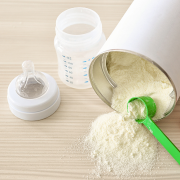
Cereulide can develop in food when spores from emetic Bacillus cereus strains germinate and multiply. This can occur if food or baby food is kept warm for too long, food is left at room temperature for hours, or if baby bottles are repeatedly reheated. Rapid cooling or sufficient heating can prevent the spores from germinating.
Foods rich in starch or protein are particularly affected by contamination with cereulide. These include cooked rice, pasta, potato products, dairy products, spice mixtures, and ready-to-eat meals. Additionally fruits, vegetables and their products were connected with diseases based on B. cereus toxins (The European Union One Health 2024 Zoonoses Report).
Challenges associated with cereulide
The possible link between biofilms and cereulide formation poses a challenge for processing plants. Biofilms in production facilities can lead to contamination of food with spores, but also with cereulide itself. Cereulide can adhere to steel or glass surfaces and is more fat-soluble than water-soluble. It is also an extremely stable toxin that is hardly inactivated by food processing or heat.
Due to its particular heat stability, pH resistance, and enzyme tolerance, cereulide poses a risk to product safety. The toxin may be present in food even if Bacillus cereus is no longer detectable.
Effects of cereulide on humans
The European Food Safety Authority (EFSA) summarises the effects of cereulide on humans in its Scientific Opinion from 2016. When food contaminated with Bacillus cereus is consumed, germs and/or toxins enter the body, which can cause gastrointestinal illness in humans. Ingesting cereulide leads to nausea and vomiting within 0.5 to 6 hours. Infant’s bodies are at risk to develop a salt disbalance, which can lead to dehydration. Even small amounts in the µg/kg range have an acute emetic toxic effect, while higher doses can cause liver and brain damage. In very rare cases, it can lead to death. Early in February 2026, the EFSA published an acute reference dose (ARfD) of 0.014 µg/kg body weight for infants in a rapid risk assessment. Based on estimated consumption values, it was determined that cereulide concentrations in reconstituted liquid infant formula above 0.054 µg/l for infant formula and above 0.1 µg/l for follow-on formula may exceed safe levels.
Non-acute toxic doses of cereulide, even at very low levels, impair insulin secretion and damage beta cells, which is why it is being discussed in connection with the development of diabetes. However, little is known about its chronic toxicity to date.
Analysis of cereulide at Eurofins
The experts from the Competence Centre for Mycotoxins and Biotoxins within the global Eurofins laboratory network have many years of experience in the analysis of biotoxins. Cereulide is analysed in accordance with ISO 18465:2017, using an internal 13-C-labelled standard and measurement by LC-MS/MS. For infant formula and powdery matrices, a modification with added water was developed. These enables the safe detection of cereulide even in encapsulated ingredients. Trueness of the method was proven by laboratory comparison studies.
In addition, a new internal analytical method has been validated, based on a recommendation from DG Sante, which enables sensitive quantification of cereulide in infant milk powder as well as in liquid infant formula with very low limits of quantification (LOQ). The achieved limits of quantification allow for a scientifically sound risk assessment of the samples, directly aligned with the recently published evaluation by the European Food Safety Authority (EFSA).
| Method | LOQ [µg/kg] | Recommended matrices |
| Inhouse (DG Sante) |
0.025 | Infant formula liquid |
| 0.050 | Infant formula powder | |
| ISO 18465:2017 modified |
0.10 | Oil, oil powder |
| 0.20 | All foods e.g., baby food, dairy products, rice, cereals, pasta, potato products, ready-to-eat meals |
Both methods are accredited and can also be applied to official samples (Art. 37(1), Regulation (EU) 2017/625).
Express analyses (including same-day-analyses) are available on request.
Questions about the analysis of cereulide
Do you have any questions about the analysis of cereulide or would you like to take advantage of our analytical services? Please feel free to contact your personal account manager or our expert Carina Kellner directly.
Eurofins WEJ Contaminants GmbH
t +49 (0)40 228992318
Sales-Contaminants@
ftdach.eurofins.com